
Be aware of this when receiving international payments in South Africa
Stephen DAlton 06 April 2026


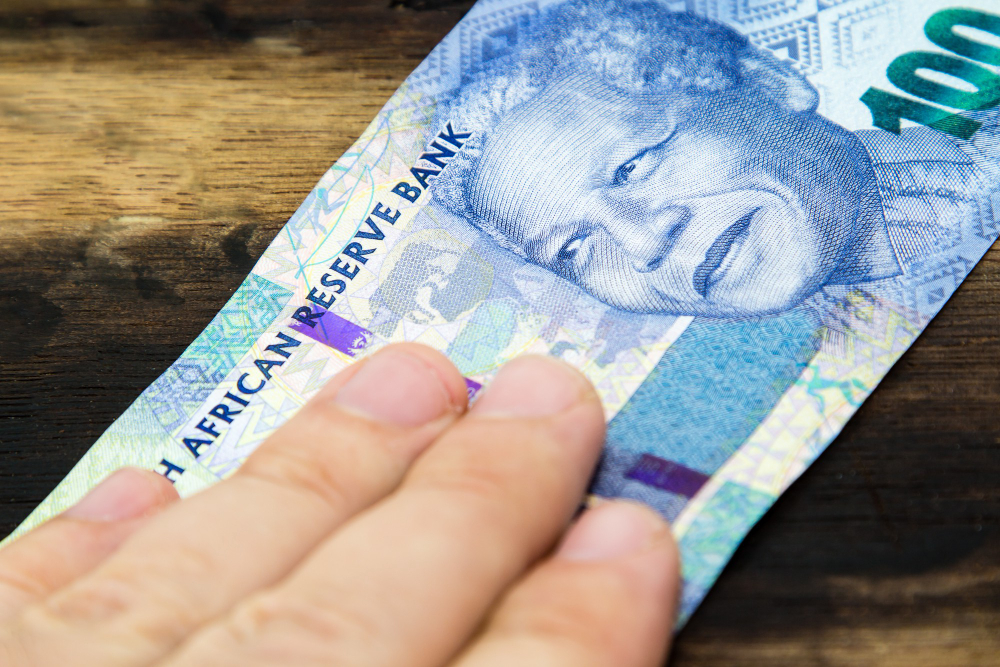
Every day millions of international payments are made across the globe. They are essential for facilitating trade and investment.
What is an international payment?
An International Payment is a money transfer that crosses national borders. The sender and recipient are based in different countries and the transaction usually involves transferring money from one currency to another, for example Pounds (GBP) to Rands (ZAR).
The global cross-border traditional and crypto payment market approached a value of about one quadrillion dollars in 2024, with crypto payments representing only a small fraction despite their recent surge.
Businesses might make cross-border payments to pay overseas suppliers or remunerate international freelancers while individuals may wish to send money to friends and family. There are many reasons for wanting to make an international payment.
On the face of it sending money abroad seems like a fairly simple process but there are a number of things to be aware of. Chief among these is the fact that each country has it own set of financial and exchange control regulations that must be adhered to in order to successfully complete the transaction.
Money sent to South Africa
By law the South African Reserve Bank (SARB) requires anyone receiving money from overseas to sign a mandate before their funds can be paid out. This mandatory requirement aims to confirm the details and nature of funds received from overseas for the purpose of managing foreign exchange, preventing money laundering, and ensuring tax compliance.
International money transfer companies like Wise, WorldRemit and GlobalWebPay use Bidvest Bank for processing transactions in South Africa. The mandate signing process is managed by AZA Finance, Bidvest's technology partner for South African payments.
Each mandate is specific to both the sender and recipient and is valid for a calendar year automatically expiring at midnight on 31 December of each year. Before funds can be paid out on the South African side a check is performed to see whether a signed mandate already exists.
- If there is one for the current calendar year for this particular sender-recipient pairing then nothing further needs to be done and the funds are released.
- If the recipient signed a mandate form in the previous calendar year then they will be contacted via email or sms in January to renew the mandate form for another calendar year.
- If they have not previously signed a mandate form, or if they have received an international payment from a new sender, an email or sms notification will be sent to them with a link to complete the online reporting mandate.
Incorrect details can cause delays
When an international payment is set up the sender is required to include with their order the recipient bank details - account name, bank name, branch code and account number. It is essential that these exactly match the account details held on record at the recipients bank. The recipient can confirm these for the sender by downloading a bank confirmation letter via their banking app. Where the recipient is a business a Company Registration Number needs to be provided.
When the funds are available and assuming the recipient has not signed a reporting mandate for the current calendar year, they will receive an email or sms notification from the payment providers local banking partner, for example Bidvest Bank, with a link to complete the online reporting mandate.
The recipient will have to validate their banking details on the mandate form and if these cannot be properly confirmed the payment providers local banking partner may ask the recipient to provide some additional supporting documentation.
The recipient will also have to provide a reason for the funds being sent. They would select this from a dropdown list on the mandate form. This is used to categorize the transaction for monitoring and reporting purposes.
Any discrepancy between the account details given in the senders order and those on record with the recipients bank will cause the mandate process to fail. The recipient cannot amend their bank name, branch code and account number on the mandate form. Rather, the transaction needs to be cancelled by the sender and rebooked with the recipients correct banking details. To avoid unnecessary delay always ensure that the recipients account details given to the sender exactly match those held by the recipients bank.
Sending money to South Africa with GlobalWebPay
South Africa is one of the most popular destinations for GlobalWebPay customers making international payments from the UK.
GlobalWebPay is registered with the South African Reserve Bank enabling them to provide a local payment service into South Africa. As part of that registration, they have partnered with Bidvest Bank to provide currency and accounts.
If you haven't already made use of GlobalWebPay's service SIGN UP today and pay no fee on your first transfer by entering the FEEFREE promo code at Checkout.